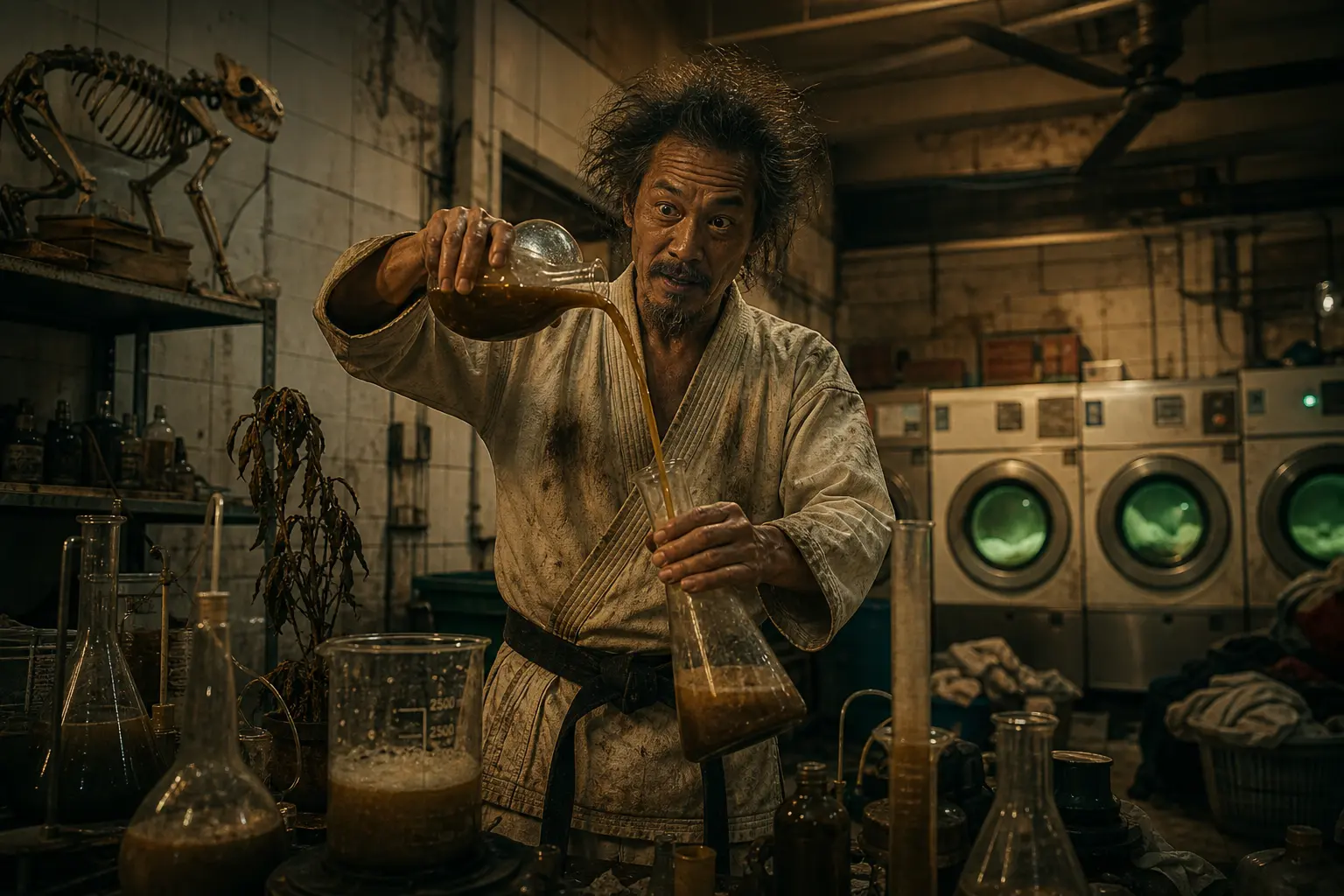
Your gi doesn't smell bad. You wash it every time. And yet — there it is. That pungent, persistent sourness that doesn't come out no matter how much detergent you use.
It's not the washing that's the problem. It's what builds up between washes. Detergent residue. Mineral deposits from hard water. Dead skin cells in the weave. After enough training sessions, a standard machine wash stops reaching any of it — even with the fanciest, most expensive detergents. These cleaning chemicals are designed for daily work wear, not for heavy duty gi fabrics or extreme sports. I can't mention any brands here, but I've tried them all over the years without success. They mostly temporarily mask the smells for about 20 minutes until the real sweating triggers and reactivates the trapped bacteria hanging out in your gear.
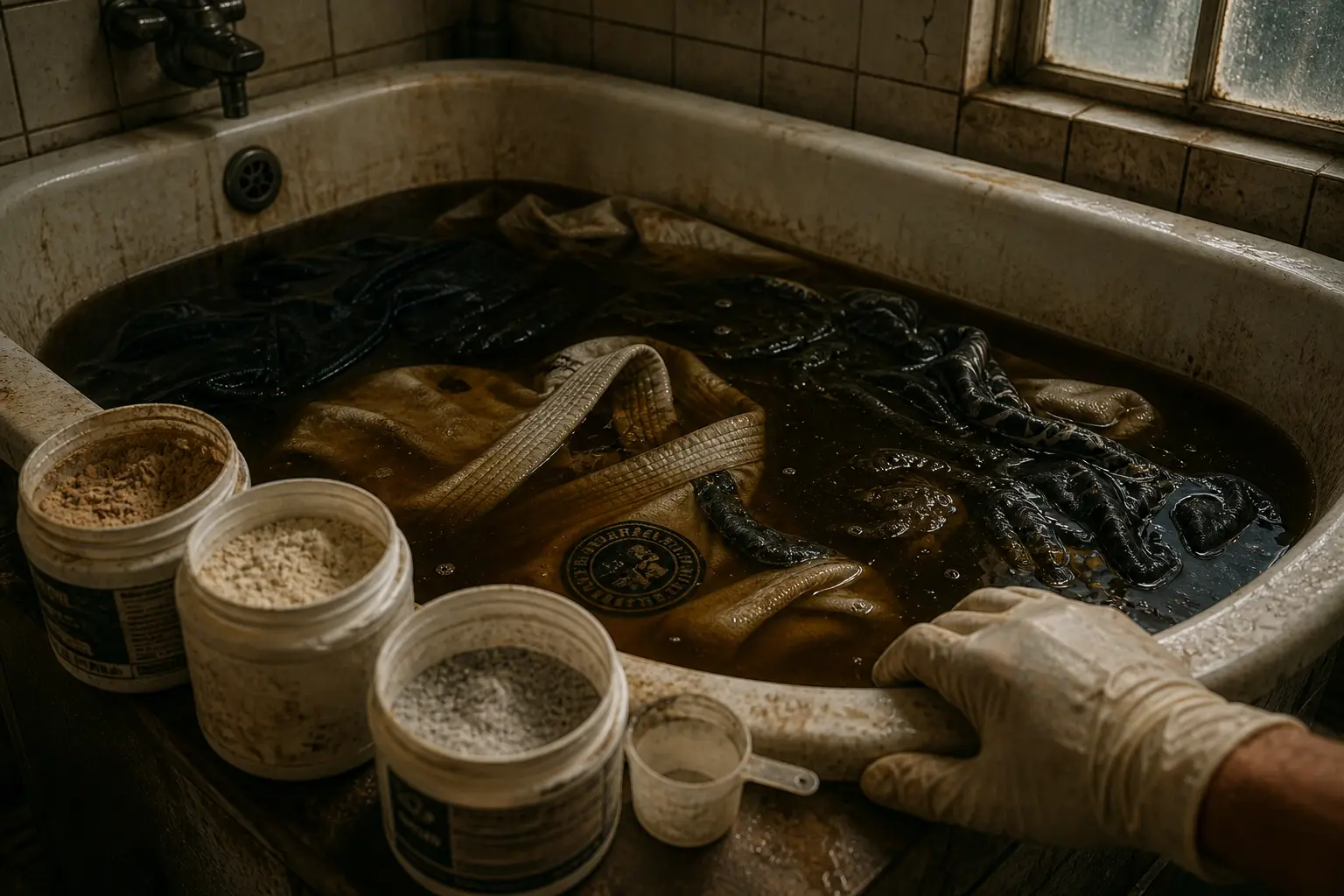
Strip washing does. It's a deep-clean technique that pulls accumulated residue out of fabric using an alkaline soak — not heat, not enzymes, just chemistry. Takes a couple of hours of passive soak time and almost no effort. You'll know it worked when the water turns brown.
One thing before we get into the protocols: strip washing is not the same as regular washing. You do this every few months, not every session. It's a reset, not a routine.
What You're Using
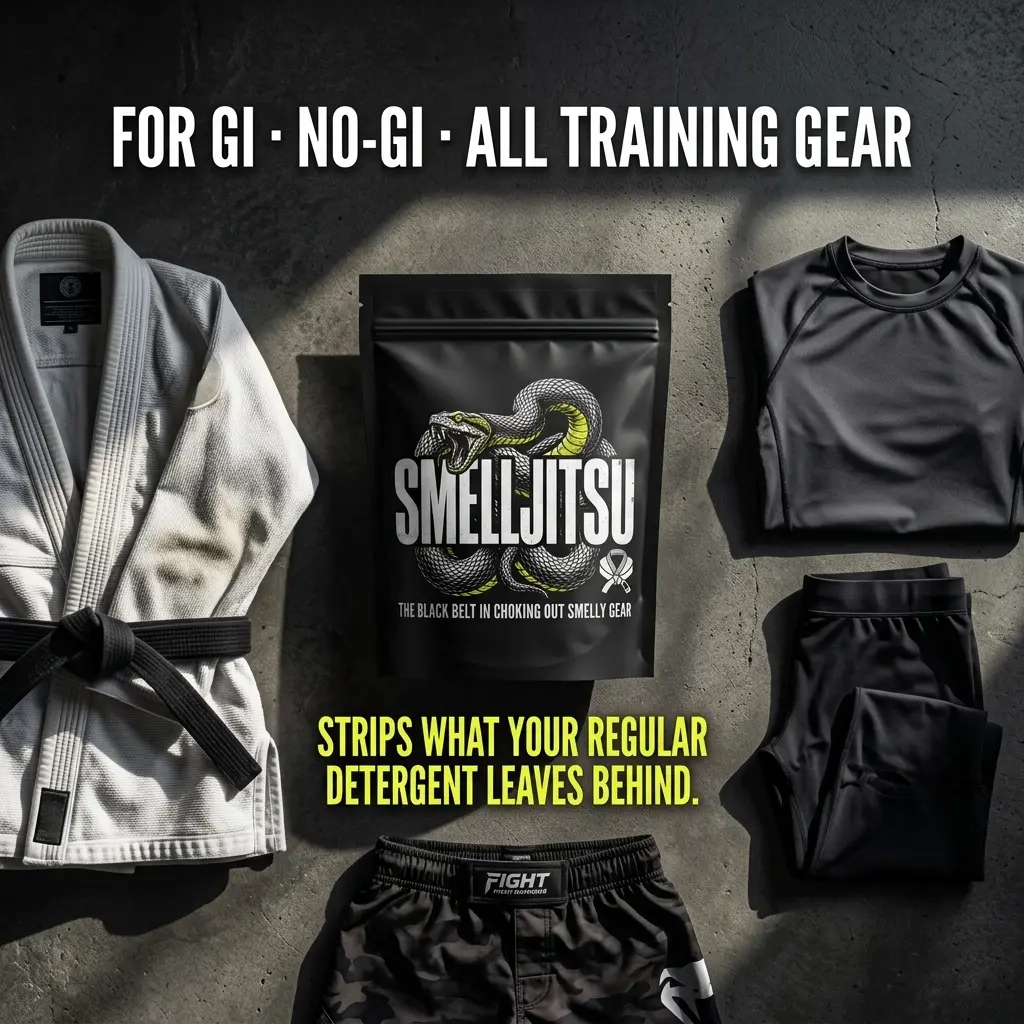
4 tablespoons of Smelljitsu per wash. That's the dose for all three methods below. Works on gi, rashguards, spats, grappling shorts, and compression wear.
If you're sourcing the cleaning agents yourself, they're typically only available in bulk quantities — more than most people will use before humidity becomes a problem. In KL's climate, powder absorbs moisture from the air and begins to clump. You'll need airtight containers, and even then they need checking. Pre-measured doses in a sealed pouch sidestep that entirely.
What we've done is sidestep the need to buy in bulk, store them, test the ratios for effectiveness — taking out the guesswork on what works and what doesn't, so you spend more time on the mats and less in the laundry room. More importantly, your gear will last longer, washing up is easier without having to deal with pungent, sour smells from the cocktail of sweat, oils, and bacteria collected from the mats and the rolls — and it will keep you smelling better, with healthier, happier skin.
Why Smelljitsu?
Since 2005, a recurring conversation in every place I've coached — from small boutique gyms to large commercial ones — has been the impossible task of getting rid of the smell in favourite gym wear. Over the years my own skin suffered from regular exposure to all these pollutants. I had to find an effective solution.
Heat is what opens the weave and activates the clean — use as much as the fabric can handle. One temperature rule if you want to be precise: up to 40°C for synthetic no-gi gear, up to 60°C for preshrunk cotton gi only. Honestly, by the time you've boiled the water and dissolved Smelljitsu, the water would have already cooled to around 60°C — ready for your gi. After a few stirs, add in your no-gi gear (rashguards, shorts, spats, underwear, knee pads, etc).
The Methods
Three options. Use whichever fits your setup. A bathtub is not necessary — a large bucket works just as well for the soak method.
- 01Fill the bucket with the hottest water the fabric can take — up to 40°C for synthetics, up to 60°C for preshrunk cotton gi.
- 02Add 4 tablespoons of Smelljitsu. Stir until fully dissolved before adding any gear.
- 03Submerge the gear completely. Push everything under the surface.
- 04Leave to soak for 1–2 hours.
- 05Transfer everything into the washing machine and run a full wash cycle — no detergent. The cleaning agents are already in the fabric and need to be rinsed out.
- 06Hang dry as normal.
- Separate colours. White gis in their own bucket. The soak pulls out residue and loose dye — you don't want that transferring across.
- Dissolve first, then add gear. Hot water dissolves the powder properly and opens the fabric weave. Adding gear too early traps undissolved powder against the fabric.
- Stir while it's still hot. Trapped oils release through mechanical action. A few minutes of continuous stirring while the water is hot does more than an hour of passive soak alone.
- 01Fill the machine to the highest water level.
- 02Add 4 tablespoons of Smelljitsu directly to the HOT water. Allow to dissolve before adding gear.
- 03Add the gear. Pause the machine and soak for 1 hour or until the water is cold.
- 04Resume and run a full cycle through to rinse. No additional detergent needed.
- 05Air dry away from direct sunlight.
- 01Add 4 tablespoons of Smelljitsu directly to the drum with the gear.
- 02Select pre-wash or soak function if available.
- 03Run a full cycle at the appropriate temperature — 40°C for synthetics, up to 60°C for preshrunk cotton gi.
- 04No additional detergent needed.
- 05Air dry away from direct sunlight.
If You'd Rather Not Source and Measure
Smelljitsu is a pre-measured strip wash made by the head coach at VCBJJ. Active cleaning agents in the right ratio, divided into five doses per pouch. No fragrance, no fillers. Works on gi and all synthetic no-gi gear. You source the ingredients yourself or you use this. Either works. Available via the VCBJJ shop.
A Few Things Worth Knowing
Don't strip wash after every session. This is a reset every couple of months — or whenever the smell stops coming out with normal washing. Overdoing it will wear the fabric faster, and you'll be buying a new gi sooner than you should.
If your gi has a strong colour (dark blue, black), test a small inconspicuous area first. The alkaline wash may affect dye in cheaper or older gis. Most mid-range and above gis hold their colour fine, but it's worth checking once.
Hard water is a factor in Malaysia. KL tap water is soft-to-moderate, which helps — the powder dissolves more easily and works more effectively. If you're getting less dramatic results than expected, your water temperature probably wasn't high enough.
Your training bag is also a problem. A freshly stripped gi goes back into a bag that's been collecting sweat vapour for months. At minimum, air your bag out completely between sessions. A bucket soak with 4 tablespoons of Smelljitsu, 2 hours, thorough rinse — once a month helps significantly.